
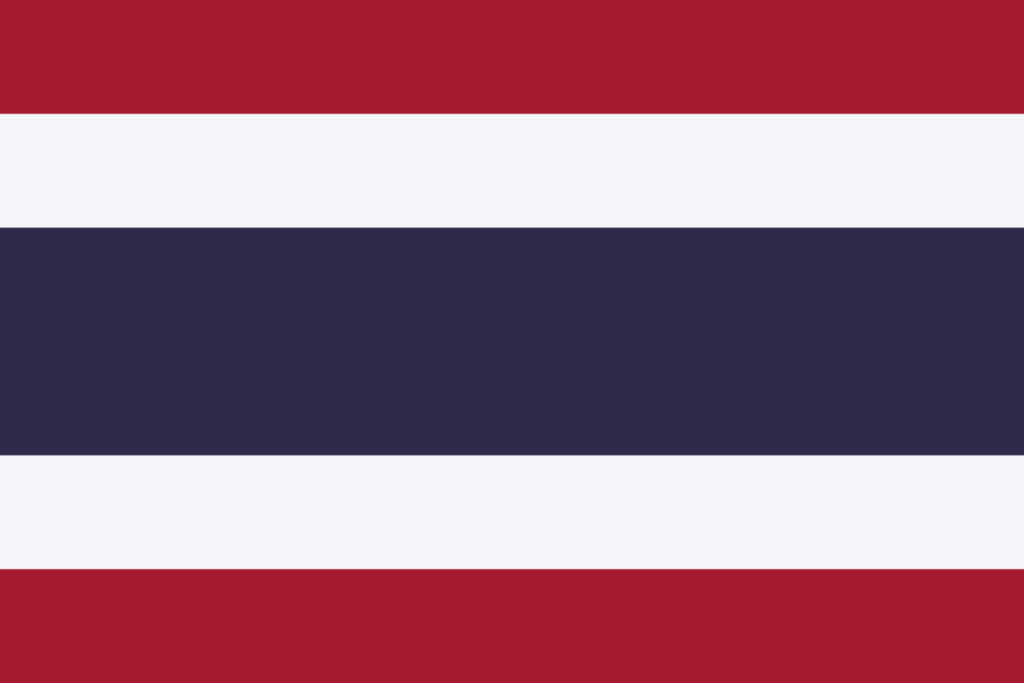
Thailand
The Thai people established their own states in the early 20th century, with the Ayutthaya kingdom showing itself to be the most dominant for a time. The states were all constantly threatened by the Khmers, Burma, and Vietnam, not to mention the presence of the French and British who were vying for colonies in Southeast Asia at the time. When European colonial powers threatened in the 19th and 20th centuries, Thailand managed to escape as the only country not to fall under colonial rule. This was due to a compromise between the French and British to keep it as a neutral territory between them.
It was sparked by young military personnel and other civil workers in 1932. This event ended the absolute monarchy of the Ayutthaya Kingdom and established a constitutional monarchy that was largely overseen by military personnel. Civilian and military factions bickered over power in the newly established government, and fear of communism and ultra-nationalism caused instability amongst them. Thailand endured sixty years of military rule, oftentimes with no clear direction or leader aside from the top general.
The military leaders at the time of World War II opted to ally Thailand with Japan to avoid becoming a victim in its path. During the post-war era, Thailand maintained close ties with the United States, avoiding adherence to the communist influences that many of its neighbours embraced. A democratic government was established in 1992 which has resumed to the present day.
In 2021, more than 92% of the Thai population were Buddhists. This was followed by 5.4% who were Muslim, and 1.2% declared to be Christians. While Buddhism is prevalent all over the country, the Muslim community is primarily found in the southern provinces.
Even though to be born Thai means to be born Buddhist the average Thai person is not much more a Buddhist than many people in the Western world consider themselves to be Christian. Some rituals are followed by most people, but only a few follow all the rules of Buddhism. It seems that Buddhism has lost a lot of its attraction to the Thai people. The economic turmoil in the last years has caused a new openness in the Thai people as many are looking for meaning in life besides materialism.
Therefore, in recent years, Thai Protestant churches have seen their strongest growth ever. Though Protestant Christians still only account for less than 1% of the population, half of all the churches in Thailand have been started in the past twenty-five years and the rate of growth for Christians in Thailand is increasing much faster than the growth rate for the general population in the country. So even though there is still the perception that the Thai church is growing very slowly, that is only a perception based on the past. The number of Christians may still be small but the Thai church is growing more quickly than ever before.