
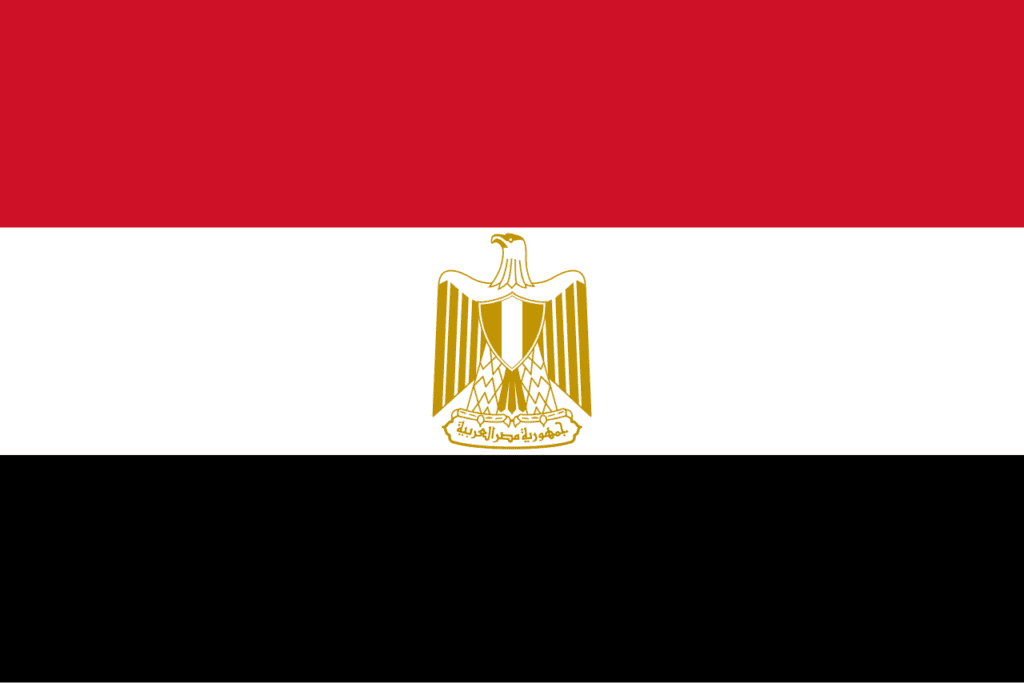
Egypt
After the flood, descendants of Noah’s three sons, Japheth, Ham, Shem, who possessed advanced technology approximately 4,000 y ago, moved together to the plains of Shinar and, rebelliously, build the Tower of Babylon. Ham had three sons: Canaan, Cush and Mizraim. After God confused their language, groups spread all over the world. Each group leaving Babel took with it whatever skills its members possessed. Mizraim (Strong 4714 מִצְרַיִםMitsrayim=Mitsrajim, i.e. Upper and Lower Egypt). Noah’s grandson, was the founder of Egypt around 2188 BC., a date consistent with both biblical and secular records. And from him the first Egyptian Dynasty sprung. The Egyptians, the Sumerians, and the Mayans all retained the technology to build pyramids. Imhotep designed Egypt’s first pyramid for third dynasty pharaoh Zoser.
The Great Pyramid of Giza, built for Pharaoh Khufu of the fourth dynasty, is “the largest and most accurately constructed building in the world.” This pyramid required advanced optical, surveying, mathematical, and construction techniques, an impressive leap beyond the technology demonstrated in earlier pyramids.
Abram’s visit to Egypt may explain Egypt’s sudden advance. Abram grew up in the advanced but idolatrous culture of Ur about three centuries after the Flood. Josephus wrote that Abram “communicated to them arithmetic, and delivered to them the science of astronomy; for before Abram came into Egypt they were unacquainted with those parts of learning; for that science came from the Chaldeans into Egypt.” Based on Josephus’s statement, Abram’s visit to Egypt may well have occurred during the fourth dynasty.
In Egypt, most persecution happens at the community level. Men can experience job loss or lack of employment opportunities, women can be harassed in the street, Christian children can be bullied at school, and, in rare instances, mobs of Muslim extremists force Christians to flee their communities. These incidents are most common in the Upper Egypt region, where Islamic hardliners are active, especially in rural communities.
President al-Sisi and his government regularly speak positively about Egypt’s Christian community—which, through the Orthodox Church, is long and historic. He purposely includes both Muslims and Christians in Egypt’s identity. However, this stance does not always extend to areas outside of major urban centres—authorities are known to ignore the concerns of Egyptian believers. Christians also have difficulty getting permission to build church buildings. Due to al-Sisi’s authoritarian style of government, speaking out against injustice can be dangerous.
Christians who have converted from Islam face enormous pressure from their family and community to return to Islam. Egyptian security services are known to detain and intimidate converts to keep quiet about their conversion. The state also makes it impossible for converts to officially be recognised as Christians.
PRAYERS FOR Egypt
- Pray that Egyptian Christians who follow Jesus out of Islam will be kept safe.
- Ask God to help Christians who have converted from Islam find fellowship and are discipled.
- Pray for Christians’ legal rights, that they will not be discriminated against.
- Pray for saved expatriates to return to their homeland to bring them the Gospel
- Pray that the real Gospel is witnessed to members of non-evangelical churches.