
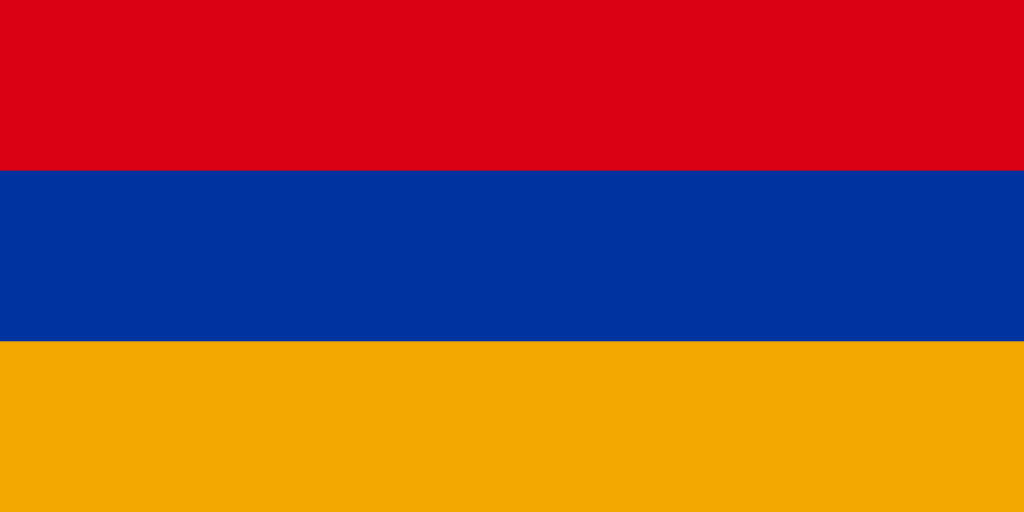
Armenia
Armenia derives from the name of Aram, a lineal descendant of Hayk. In the Hebrew Bible/OT the Table of Nations lists Aram as the son of Shem.
Ge 10:22-23 “The children of Shem; Elam, and Asshur, and Arphaxad, and Lud, and Aram. 23And the children of Aram; Uz, and Hul, and Gether, and Mash.”
The Ottoman Empire’s Genocide of the Armenian people: Armenia is a small country whose people have faced intense political violence throughout their history. The Armenian Genocide, committed by the former Ottoman Empire in 1915, claimed an estimated 600,000 to 1.5 million Armenian lives. War and conflict continued with neighbouring Azerbaijan over the Nagorno-Karabakh region, which the Soviet Union controversially placed in Azerbaijani territory despite its Armenian-majority population.
As a result, hundreds of thousands of Armenian lives were lost, and tens of thousands were displaced. Most recently, starting in late 2022, Azerbaijan blockaded Nagorno-Karabakh, sparking more conflict and fears of genocide by starvation. Eventually, in September 2023, the Armenian separatist government in Nagorno-Karabakh announced its dissolution, and nearly 80% of remaining Armenians fled in fear as Azerbaijan seeks greater control of the region.
Armenia’s economy has remained weak and has been made worse by these conflicts as well as ongoing trade conflicts with Turkey. Unemployment and poverty soar at an estimated 20 and 26% respectively. Many working-age people have left Armenia for work abroad, putting increasing pressure on the government’s struggle to fund the pension system, health care, and other services for the growing senior population. Armenia has heavily depended on Russia, both economically and politically—however, Russia has neglected its peacekeeping promises and strengthened its political and economic ties with the Azerbaijani government. The future of Armenia remains very uncertain.
While Armenia prides itself as the world’s first officially Christian nation, the Armenian Apostolic Orthodox Church that represents the vast majority of Armenian Christians remains a mostly cultural rather than spiritual institution. Though “Armenian” and “Christian” are considered synonymous, many Armenians have never heard the gospel.
Everything in the Apostles’ Creed (≈700 AD) is “sort-of true”, but as with the Nicene Creed (381 BC), what is missing makes ALL the difference concerning the gospel. The gospel of the grace of God by which men are saved today is absent. The Creeds are full of ambiguity and half-truth which got interpreted in different ways. How else could it be agreed upon all the main churches such as Catholics, Anglicans, Lutheran’s, Armenian Church, Presbyterians and all ‘reformed’ churches?
- Fundamental doctrines of Salvation by what? (Baptismal Regeneration vs. Believer’s Baptism)
- Hell (Everlasting Fire vs. OT Hades with its two compartments Paradise and Hell), or maybe even Catholic’s Temporary Purgatory?
- Biblical Ordinances vs. Heretical Sacraments.
- Deity of Christ (Begotten or Created).
- Church (universal body of believers [1Co 12:12] or RC Church?).
- Holy Spirit (Of the Trinity, or merely an impersonal divine force?) etc.